Minecraft Dungeon Finder – Locate Dungeons and Mob Spawners
A minecraft dungeon finder is not a map pin – it is a method. Dungeons are small, scattered, and buried: a mossy cobblestone room the size of a bedroom, hidden somewhere in the caves under your world, with a spawner in the middle and two chests against the wall. No seed map plots them, so this guide gives you everything that actually works – how dungeons generate, how to find them by caving, and how to turn one into an XP farm.
Try These Seeds in the Seed Map
That honesty matters because other “dungeon finder” pages imply a map pin that does not exist. A minecraft dungeon finder guide that promised map pins would be lying; this one gives you the methods that actually work.
What Is a Minecraft Dungeon Finder?
A minecraft dungeon finder, honestly defined, is a method for locating dungeons and their mob spawners – not a map layer. Dungeons generate underground in the Overworld as small mossy-cobblestone rooms, usually between y=0 and y=60, each containing one monster spawner and up to two loot chests. They generate in every version, including minecraft 1.21 dungeon seed worlds and every version before and since, and they are the most common underground structure in the game.
Players searching for a chunkbase dungeon finder or a chunkbase mob spawner finder hit the same wall: Chunkbase does not plot dungeons either, for the same reason. Dungeons are generated during chunk decoration, not from the seed-based structure placement that map tools compute. The minecraft dungeon finder method in this guide has three parts: cave-rich terrain, sound, and mossy cobblestone. For the full comparison of what seed maps can and cannot show, see our Chunkbase alternative page. A dungeon locator minecraft search wants the same map pin that does not exist, so the method below is the answer.
How Dungeons Generate
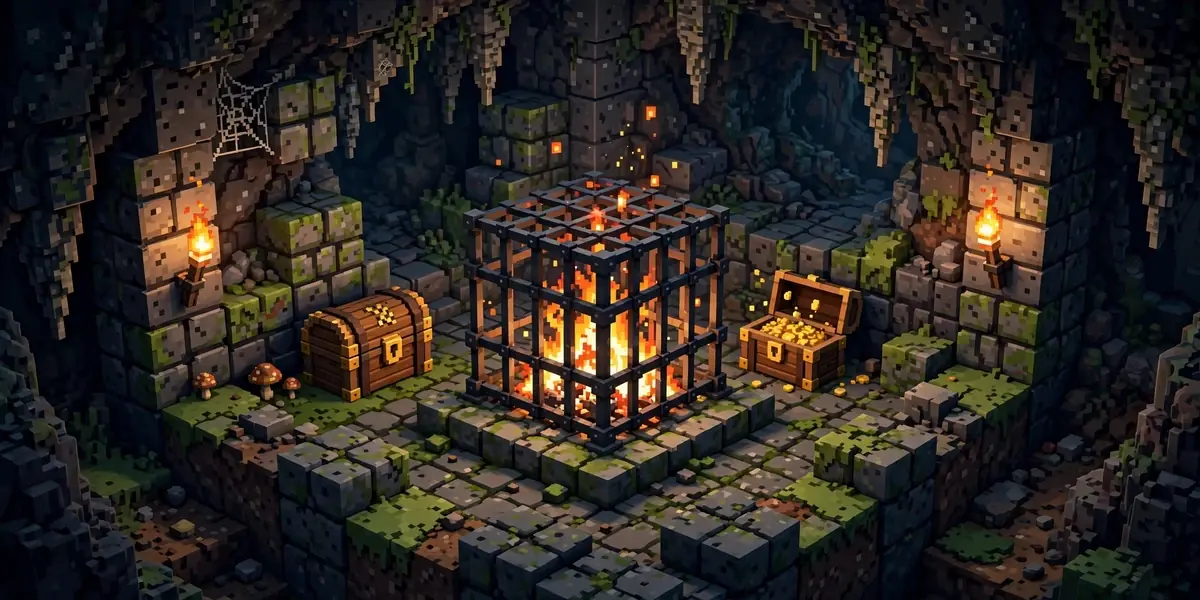
A dungeon is a single room, roughly 5×5 to 7×7 blocks, built from mossy cobblestone and cobblestone, with a monster spawner in the centre and up to two chests against the walls. The room is carved into solid ground, which means it can appear anywhere underground – under plains, under oceans, under mountains. It generates attached to caves, ravines and other openings often enough that caving is the reliable way to find one, but a dungeon can also sit fully sealed in solid rock with no entrance at all. Those sealed dungeons are effectively invisible without mining through stone.
Spawner type is random per dungeon. Zombie, skeleton and spider spawners are the three dungeon types – cave spider spawners belong to mineshafts, blaze spawners to Nether fortresses, and magma cube spawners to bastion treasure rooms. The minecraft dungeon finder searches that promise exact spawner pins will not deliver one, because the spawner-finder idea works only for spawners that are part of plotted structures – fortresses, bastions, Trial Chambers – not for free-standing dungeon spawners. What you can do is learn the signs and work the caves. That is why this minecraft dungeon finder guide focuses on caving skill rather than map pins.
How to Find a Dungeon in 6 Steps
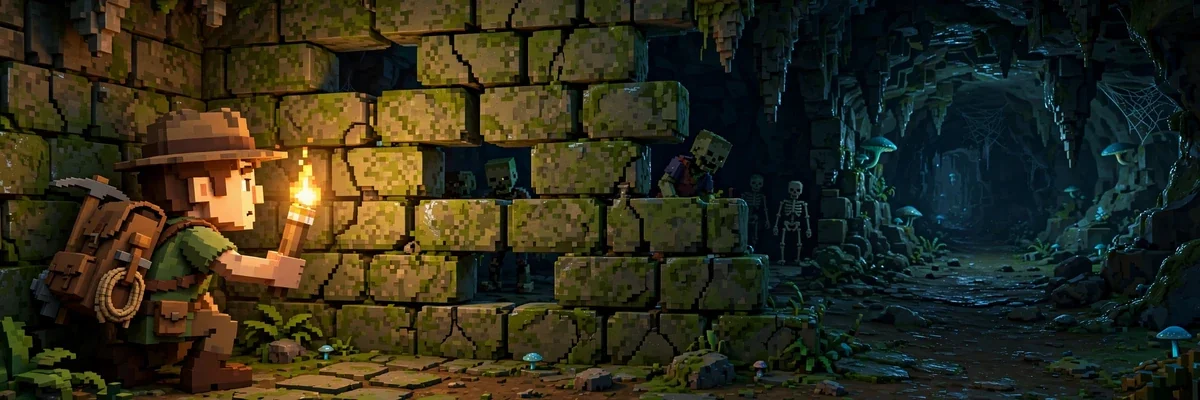
- Pick cave-rich terrain – The minecraft dungeon finder approach starts with terrain: head for mountains, ravines and deep cave entrances. The seed map helps here even without a dungeon layer: its biome search locates lush caves and dripstone caves biomes, which mark cave-dense ground worth exploring.
- Listen for the spawner – In the minecraft dungeon finder method, sound matters more than sight: a spawner’s mobs make constant noise. If you hear several zombies, skeletons or spiders in one spot while caving, stop and listen: dungeon mobs cluster around one point, and the sound gets louder as you approach the room.
- Follow the mossy cobblestone – Dungeon walls are the only place mossy cobblestone generates naturally underground. Spotting a mossy cobblestone block in a cave wall means a dungeon is within a few blocks.
- Light as you go – Place torches as you explore. Light does not just keep you safe; it makes unlit cave sections – and the spawner’s dark room – stand out.
- Dig toward the sound – If you hear a spawner but cannot see the room, dig toward the noise in short bursts, listening after each few blocks. The room is small, so you will break through quickly.
- Secure the room – The moment you find it, light the spawner area to stop spawns, then decide: loot and leave, or keep it dark for a farm. Never leave a found dungeon unlit while you go home for supplies – it will spawn on you in the dark.
Dungeon Spawner Types
| Spawner | Where it appears | Best use |
|---|---|---|
| Zombie | Dungeons | XP farm, rotten flesh, iron and carrot/potato drops from drops |
| Skeleton | Dungeons | XP farm, bones, arrows, bonemeal supply |
| Spider | Dungeons | XP farm, string, spider eyes |
| Cave spider | Mineshafts, not dungeons | XP farm, string – poison makes it the hardest farm |
| Blaze | Nether fortresses | Blaze rods, brewing |
| Magma cube | Bastion treasure rooms | Magma cream, fire resistance |
Players keep asking the minecraft dungeon finder version of the chunkbase zombie spawner question – “where is the nearest zombie spawner?” – and the honest answer is that zombie spawners in dungeons cannot be mapped from the seed. What you can do is find a dungeon by caving, then check its spawner type when you arrive. The same goes for the minecraft seed map spawner finder and minecraft seed zombie spawner searches – neither maps dungeon spawners. Zombie spawners are the most useful farm type for most players: zombie drops feed trading, and the farm design is the simplest. Skeleton spawners are the best bonemeal source in the game. Spider spawners are the least valuable, but still worth farming for string if you need it.
For spawners that CAN be mapped, use the structure finders: the Minecraft Nether Fortress Finder for blaze spawners, the Minecraft Bastion Finder for magma cube spawners, and the Minecraft Trial Chamber Finder for trial spawners.
Double Dungeons, Save Scanners and Seed Predictors
One advanced goal is worth knowing about: a double dungeon – two spawners close enough to run from a single AFK spot. A spawner only works within 16 blocks of the player, so two spawners need a shared point within 16 blocks of both. The best pairs are matching types, such as two skeleton spawners for bones and arrows, but mixed pairs are more common, since roughly half of all dungeon spawners are zombies and skeletons and spiders take about a quarter each. That shared-point math is the core of any minecraft dungeon finder strategy: find two spawners within 16 blocks of one point, and one farm serves both. Two tools can help beyond caving. World-save scanners read your actual saved world files and list every spawner already generated, including multi-dungeon setups – they need a generated world, not just a seed. Seed-based dungeon predictors also exist, but treat them as estimates: their own authors warn they are not fully accurate, and they can miss real dungeons or mark spots that hold nothing. Caving, sound and mossy cobblestone stay the reliable method.
Turning a Dungeon Into an XP Farm
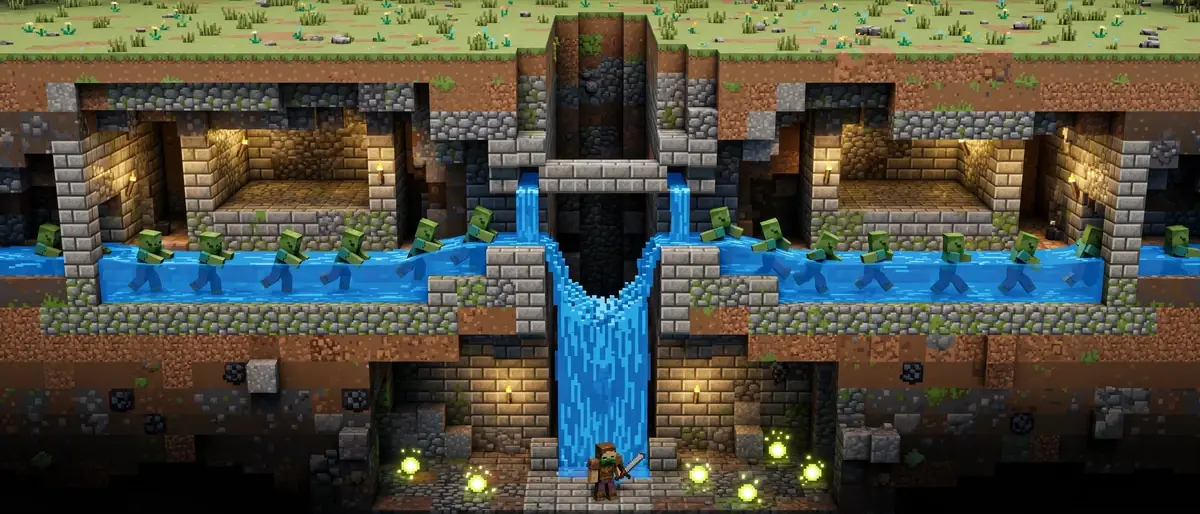
A found dungeon is the cheapest XP farm in the game, and the minecraft dungeon finder payoff for all that caving. The classic design needs no redstone skill: clear a room around the spawner, channel the spawned mobs with water into a single drop shaft, and let fall damage reduce them to one-hit kills. The spawner only works when a player is within 16 blocks, and it stops spawning if more than six mobs of its type are already nearby – so the collection area must move mobs away from the spawner quickly, or spawning stalls.
The basic build: leave the spawner in a 9×9×3 dark room, put water sources at the edges flowing toward a central 1-block-wide hole, and dig the hole down 22 blocks so mobs land with half a heart left. At the bottom, build a kill slot where you can hit their feet through a gap. One hit per mob, a steady stream of XP, and drops collect at your feet. Zombie and skeleton farms both run beautifully on this design. Spider farms need a wider shaft because spiders climb – and cave spider farms from mineshafts need poison protection on top of that.
Two rules keep the farm safe. First, never light the spawner room once the farm is running – light stops spawning. Second, light everything around it. A dark cave next to your farm spawns wandering mobs that walk into your collection area and jam it, or worse, walk up behind you. And always build the farm with an off switch: a torch you can place to disable the spawner when you need to repair the collection chamber.
Dungeon Loot: What Is in the Chests
Dungeon chests are modest but useful, and the minecraft dungeon finder rule is simple: loot both chests before converting a dungeon to a farm, because the farm build usually buries or blocks the chest spots. Inside you will find saddles, horse armour, golden apples, music discs, enchanted books, name tags, and gunpowder. The standout is the golden apple – dungeons are one of the few early-game sources – and the saddle, which you cannot craft. Do not expect diamonds: dungeons are an early-game structure, and their loot matches that. The real prize of a dungeon is the spawner, not the chests.
Finding Dungeons on Bedrock
Everything in this minecraft dungeon finder guide works the same on Bedrock. Dungeons generate the same way, with the same three spawner types, and the same caving methods find them. The chunkbase mob spawner finder question gets the same honest answer on Bedrock: no mainstream map plots dungeon spawners, on either edition. The minecraft seed map dungeon finder workflow that does work on Bedrock is the same one that works on Java – use the seed map’s biome search to find cave-rich ground, then cave with your ears open.
The minecraft dungeon finder distinction still applies on Bedrock: use the structure finders that do have layers: fortresses, bastions and Trial Chambers all plot on Bedrock with the real Bedrock generator, and their spawners are part of the mapped structure. If you arrived here searching for a minecraft dungeon finder bedrock guide, the method is the same – cave-rich ground, spawner sound, and mossy cobblestone – because dungeons generate the same way on both editions.
Dungeons reward the player who explores rather than the one who Googles – and that is the whole philosophy of this minecraft dungeon finder guide. Cave with your ears open, watch for mossy cobblestone, and turn the first spawner you find into a farm – it will pay for itself a hundred times over. A minecraft dungeon finder, in the end, is a method rather than a button – and the method above finds dungeons in every world. For every structure the seed map CAN plot, start at the Minecraft Structure Finder.
Minecraft Dungeon Finder vs Chunkbase Dungeon Finder
Players who search for a chunkbase dungeon finder hit the same wall everywhere: no mainstream seed map plots dungeons, because dungeons generate during chunk decoration, not from seed-based structure placement. A chunkbase dungeon finder does not exist as a map layer, and neither does one here – this page is honest about that. What a chunkbase dungeon finder search really wants is the method on this page: cave-rich terrain, spawner sound, and mossy cobblestone. The same goes for a minecraft seed map mob spawner finder: it cannot map free-standing dungeon spawners either. The chunkbase dungeon finder idea fails for the same reason on both editions, so caving skill beats map pins every time. If a chunkbase dungeon finder result promises exact dungeon pins, treat it as an estimate: predictors can miss real dungeons or mark spots that hold nothing. For every structure a seed map CAN plot – the kind a chunkbase dungeon finder cannot show – start at the Structure Finder or compare what maps can and cannot show on our Chunkbase alternative page.
Final Thoughts
A dungeon is only the start of the farm. Once the spawner is secured, build the drop shaft, light everything around it, and add an off-switch torch – a farm you can repair safely is a farm that keeps paying.
If you arrived here searching for a chunkbase dungeon finder, you now know why no map pins exist – and you also know the method that actually finds dungeons in every world.
Cave with your ears open. Use the minecraft dungeon finder method above – terrain, sound, mossy cobblestone – and turn the first spawner you find into a farm. Then browse the finder hub or the best seeds for every structure the seed map can plot.