Minecraft Ruined Portal Finder – Find Broken Nether Portals & Fast-Track the Nether
A minecraft ruined portal finder turns one of the best early-game shortcuts into something you can plan for. Ruined portals are broken Nether portal frames scattered across the Overworld – some half-buried in deserts, some standing in oceans, some hanging off cliffs. Complete the frame with a few obsidian blocks, light it, and you are in the Nether without ever mining a full portal’s worth of obsidian. Paste your seed into the minecraft ruined portal finder below and every ruined portal appears with coordinates, so the Nether trip becomes a day-one decision instead of a mid-game project.
Try These Seeds in the Seed Map
The reason ruined portals punch above their weight is the chest. Almost every ruined portal has a gold-block-decorated chest nearby, and that chest can hold obsidian, flint and steel, gold tools, and – rarely – enchanted golden apples. A good ruined portal at spawn hands you Nether access and a head start in the same ten minutes.
What Is a Minecraft Ruined Portal Finder?
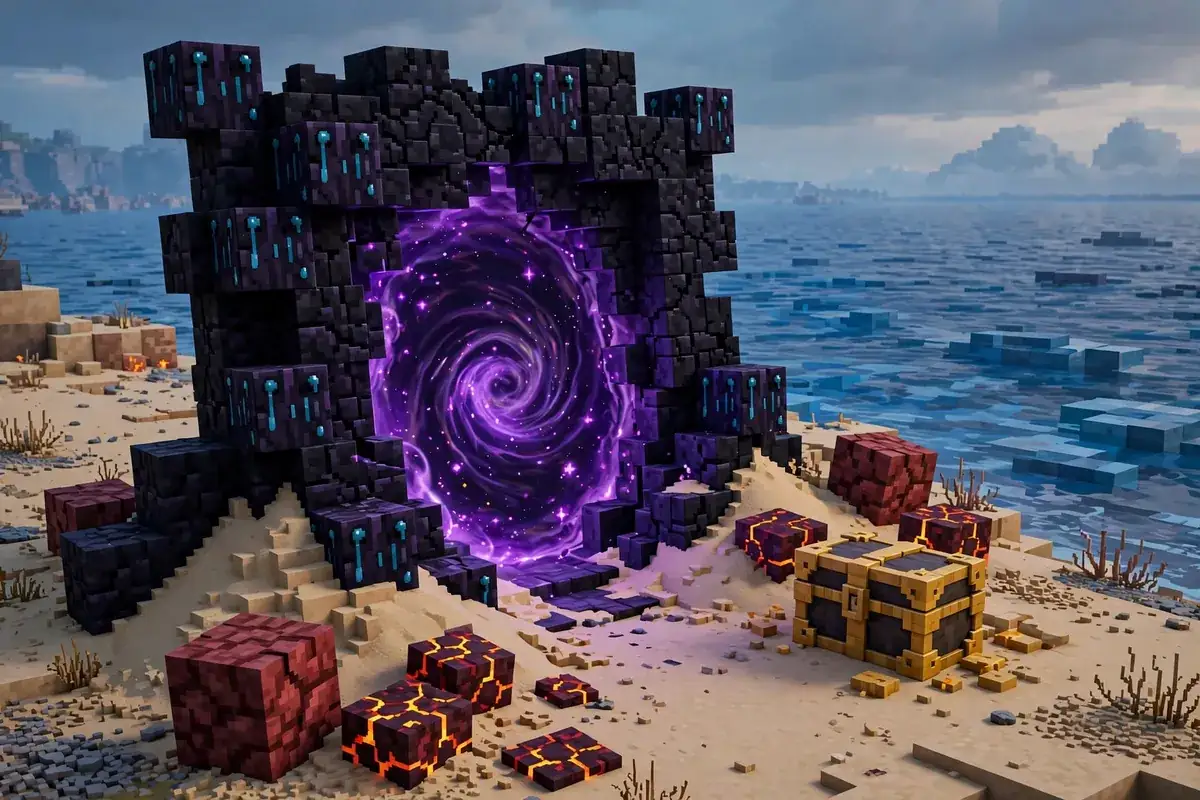
A minecraft ruined portal finder reads your world seed and calculates where every ruined portal generates, then plots each one on a map with its coordinates. A ruined portal is a partially destroyed Nether portal frame made of obsidian and crying obsidian, usually surrounded by netherrack, magma blocks, and gold blocks, with a loot chest close by. Because portal placement is decided by the seed, the same seed always produces the same portals in the same spots – so the map is exact. Ruined portals are the only generated structures that appear in both the Overworld and the Nether, and they can generate exposed on the surface, half-buried, underwater, or fully underground, where air pockets surround them.
In the minecraft ruined portal finder, the Ruined Portal layer shows each portal on the seed map. Enter your seed, pick your edition and version, and turn the layer on in the Layers panel. The tool covers Java 1.7–“26.3 and Bedrock Beta 1.7–“26.60 with the real generator for each edition. One detail worth knowing: ruined portals also generate inside the Nether itself, and the tool has a separate Ruined Portal layer for the Nether dimension – switch dimensions to see those.
How to Use the Minecraft Ruined Portal Finder
- Paste your seed – Enter your world seed in the seed box on the seed map. If you do not have a world yet, the Minecraft seed finder can search for seeds with a portal near spawn.
- Match your edition and version – Choose Java or Bedrock and your exact game version, since portal placement differs between editions.
- Turn on the Ruined Portal layer – Open the Layers panel and switch on Ruined Portal. It is off by default because portal markers are most useful once you have zoomed in.
- Scan near spawn – Zoom to your spawn area and look for portal markers in the minecraft ruined portal finder. The best portals sit within a few hundred blocks of spawn.
- Search for new seeds – Click Find seeds, then Add condition, choose Structure → Ruined Portal, and set a radius. Click Search for up to 100 seeds with a portal where you want it.
- Complete the frame – Head to the coordinates, loot the chest, mine the gold blocks, and add the missing obsidian to finish the frame.
- Share the location – Use the share menu to Copy link, Save PNG of the map, or export a 4K poster for your group.
If you are used to the chunkbase ruined portal finder, the workflow here will feel familiar: paste a seed, see portals. A chunkbase ruined portal search answers the same question for an existing seed. The difference here is that you can also run a fresh seed search for portals near spawn, and you can stack a portal condition with a village condition to find the strongest possible start.
Portal Chest Loot: What to Expect
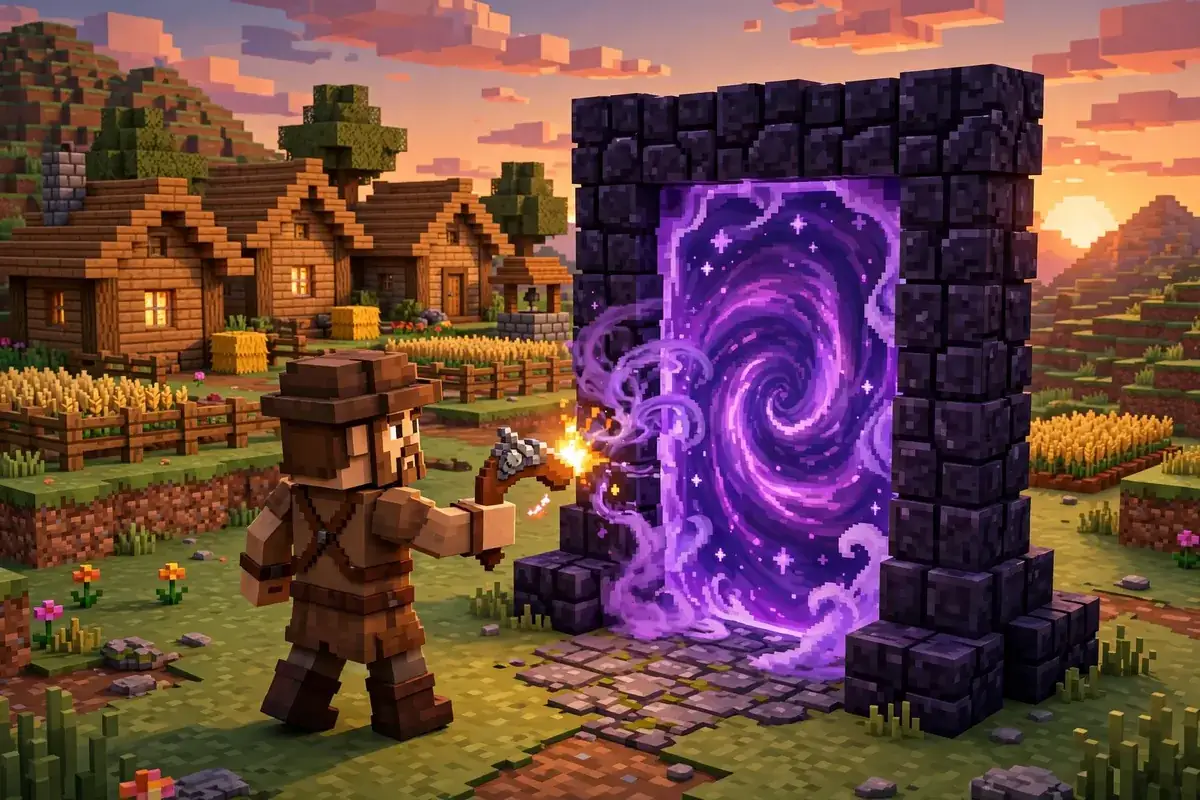
The chest next to a ruined portal is one of the most variable loot sources in the early game, and the minecraft ruined portal finder helps you find portals worth looting:
| Loot | Why it matters |
|---|---|
| Obsidian (up to 6) | Finishes or nearly finishes the portal frame for free |
| Flint and steel / fire charge | Lights the portal without crafting your own |
| Gold ingots and gold tools | Piglin bartering currency the moment you enter the Nether |
| Enchanted golden apple (rare) | One of the rarest items in the game, from a surface chest |
| Gold blocks | Mine the frame’s gold blocks for extra bartering gold |
No two ruined portals have the same chest, and the frame itself varies too – some portals are nearly complete, needing only one or two obsidian, while others are little more than a pile of rubble. The map marker tells you where the portal is; the frame’s condition is something you judge when you arrive. Prioritise portals that look tall and intact from the surface, and always bring a spare obsidian or two just in case.
One trap to avoid: the frame mixes regular obsidian with crying obsidian, and crying obsidian cannot complete a portal frame. When topping up a broken frame, count only the regular obsidian – mine the frame’s obsidian with a diamond pickaxe and ignore the purple, particle-emitting crying blocks. That counting rule is the one detail a minecraft ruined portal finder cannot do for you – it plots the portal, you count the usable obsidian.
Ruined Portals, Villages, and the Perfect Spawn
The strongest survival start in Minecraft is a village and a ruined portal within sight of each other. The village gives you beds, food, and trading; the portal gives you Nether access, gold for bartering, and a shortcut to blaze rods and potions. Minecraft seeds ruined portal searches are popular for exactly this reason – and the best version is a minecraft seeds with village and ruined portal combination, or even the full best minecraft seeds for survival with village and ruined portal setup with both structures near spawn.
Use the minecraft ruined portal finder to check both layers at once. The Village layer and the Ruined Portal layer can stay on together, so you can measure the distance between the village and the portal at a glance. If you are hunting this combo from scratch, stack two conditions in the seed search: Structure → Ruined Portal within 500 blocks of spawn, plus Structure → Village within 1,000 blocks. The results are seeds where the survival loop – loot the portal, settle the village, enter the Nether – is ready from day one.
A chunkbase ruined portal finder result for the same seed shows the same portals; the village layer is what turns a portal into a start.
Pair the plan with the Minecraft village finder for the village side of the search, and the Minecraft biome finder to check the terrain around your spawn. If the Nether side of the trip matters to you, the Minecraft structure finder shows Nether fortresses and bastions on the Nether map – the next stops after your first portal crossing.
Ruined Portal Finder for Bedrock
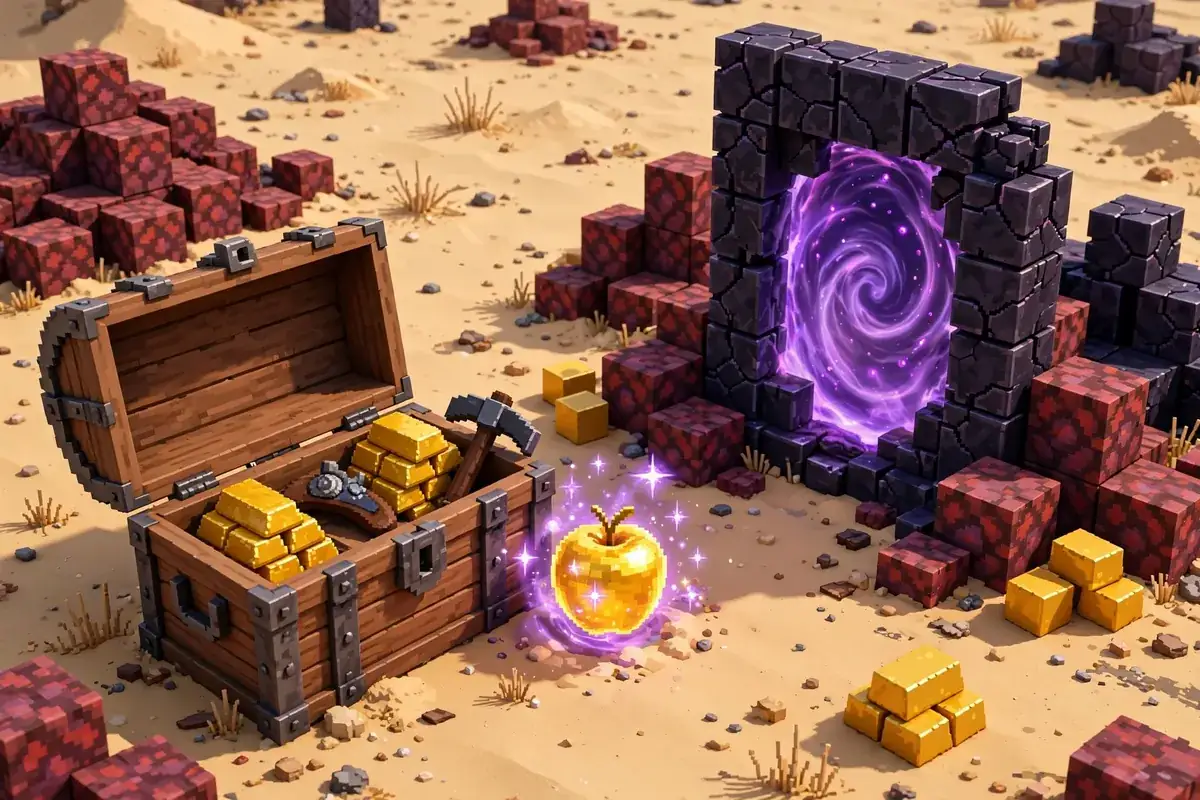
In the minecraft ruined portal finder, Bedrock ruined portals generate through the real Bedrock generator in this tool, not a Java approximation. Paste your Bedrock seed, switch the edition dropdown to Bedrock, and pick your version. The portal markers update to match Bedrock generation, and the seed search works the same way – add a Ruined Portal condition and search.
A chunkbase ruined portal finder check on Bedrock follows the same steps – paste a Bedrock seed, pick the version – with this tool running the genuine Bedrock generator.
One practical note for Bedrock players: portal frames and chest loot follow the same rules as Java, but the exact frame shape and chest contents are seed-dependent on both editions. Always match the exact version you play on, since structure placement can shift between versions.
Chunkbase Ruined Portal Finder vs This Tool
A chunkbase ruined portal finder search and this tool start identically: paste a seed, see portal markers. The difference is the seed search. A chunkbase ruined portal finder check maps the portals in a world you already have; this tool also finds brand-new seeds with a portal near spawn, and lets you stack a village condition so the portal-plus-village start is ready from day one. Either map shows the same frames – the crying obsidian still has to be counted by hand, whichever one you use.
Ruined Portal Finder vs Wandering
Without a finder, ruined portals are a matter of luck. They are small, they blend into beaches, deserts, and oceans, and many sit half-buried where you would never notice them. The minecraft ruined portal finder removes the luck: every portal in the seed, with coordinates, before you take a single step. For an existing survival world without cheats, pasting the seed is the only practical way to map them all.
When you are done planning your Nether trip, pair the minecraft ruined portal finder with the full set of tools on the finders hub, and the Minecraft seed finder can search for portal seeds from scratch. Prefer a ready-made world? The best Minecraft seeds collection includes survival-friendly spawns worth checking for portals underneath.
Final Thoughts
A ruined portal near spawn changes the whole shape of a survival world – Nether access on day one, gold for bartering, and a shortcut to everything the Nether holds. The only thing standing between you and that start is knowing where the portal is.
If you came here from a chunkbase ruined portal finder search, the workflow will feel familiar – paste a seed, see the portals – with the seed search as the extra step for new worlds. Open the seed map, match your version, and try the minecraft ruined portal finder on your own world: find the nearest frame, count the usable obsidian, and light it.