Minecraft Bastion Finder – Locate Bastion Remnants by Seed
A minecraft bastion finder shows you every bastion in your seed before you step through the portal. Bastion Remnants are the Nether’s other fortress – bigger, richer, and considerably more dangerous – giving you gold blocks, ancient debris-adjacent loot, and piglins who will trade for your gold and kill you for your mistakes. Pick the right type and arrive with gold armour on.
Try These Seeds in the Seed Map
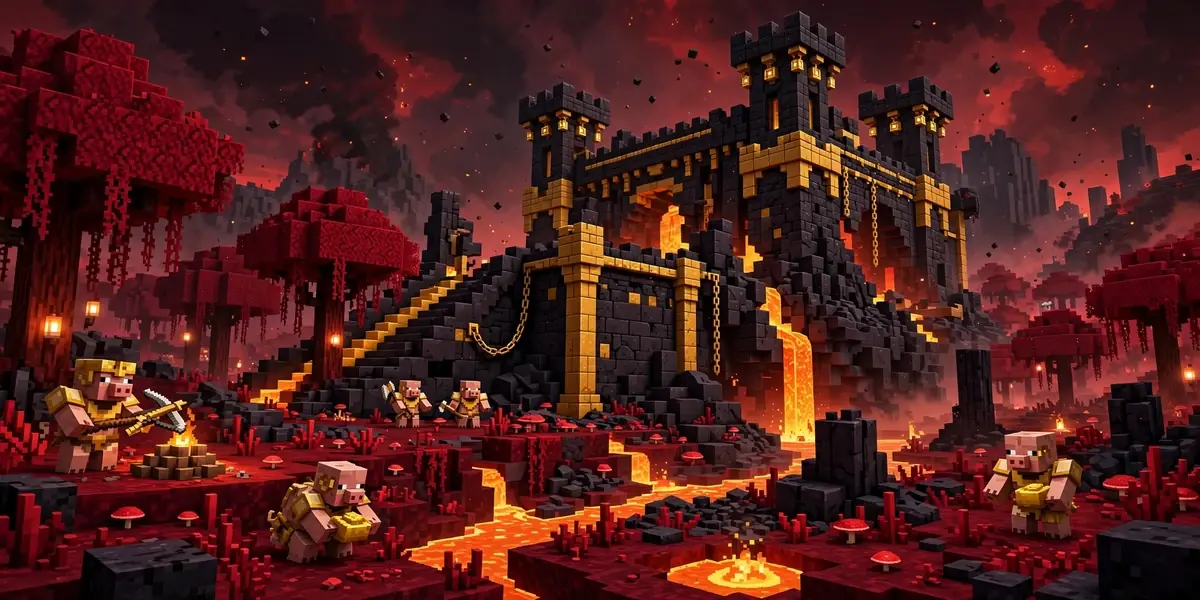
Bastions come in four shapes, and the shape decides the loot. Walking into a bastion blind means not knowing whether you found a treasure room or a hoglin pen until you are already surrounded. A minecraft bastion finder removes that gamble: click any bastion marker and its details card names the type before you go.
What Is a Minecraft Bastion Finder?
A minecraft bastion finder is a seed-based map tool that computes where Bastion Remnants generate in your world and plots them on a Nether map. Bastions generate in every Nether biome except basalt deltas, so they are spread across the whole dimension. Click a bastion marker to open its details card, which names its type – Housing Units, Hoglin Stables, Treasure Room or Bridge – so you know what you are walking into before you go.
Players searching for a chunkbase bastion finder, a chunkbase nether bastion tool, or a chunkbase piglin bastion map will find the same core workflow here: paste a seed, switch to the Nether, read bastion coordinates. The difference is that this tool also searches for new seeds with a bastion near spawn, and it runs the real Bedrock engine for Bedrock seeds. For the full comparison, see our Chunkbase alternative page.
If you searched for a nether bastion finder, you have found the same tool – bastions only generate in the Nether, so every bastion finder is a Nether finder. The longer form, minecraft nether bastion finder, means the same thing too.
How to Find a Bastion in 5 Steps
- Paste your seed – Enter your world seed in the seed box at the top of the seed map.
- Switch to the Nether – Use the dimension buttons to change from Overworld to Nether. The map redraws with Nether biomes.
- Turn on the Bastion layer – In the Layers panel, make sure Bastion Remnant is switched on. In share links the layer travels as
s19in thelparameter, so a link can open the map with the bastion layer already active. - Read the bastion type – In the minecraft bastion finder, click a bastion marker. The details card names its type: Housing Units, Hoglin Stables, Treasure Room or Bridge. Pick the type that matches your goal – treasure for gold, stables for a farm.
- Travel with gold armour – Wear at least one piece of gold armour so neutral piglins leave you alone, and bring gold ingots for bartering. The structure finder minecraft nether bastion view shows fortresses on the same map, so plan one portal that serves both.
The 4 Bastion Types
| Bastion type | What it looks like | What you get |
|---|---|---|
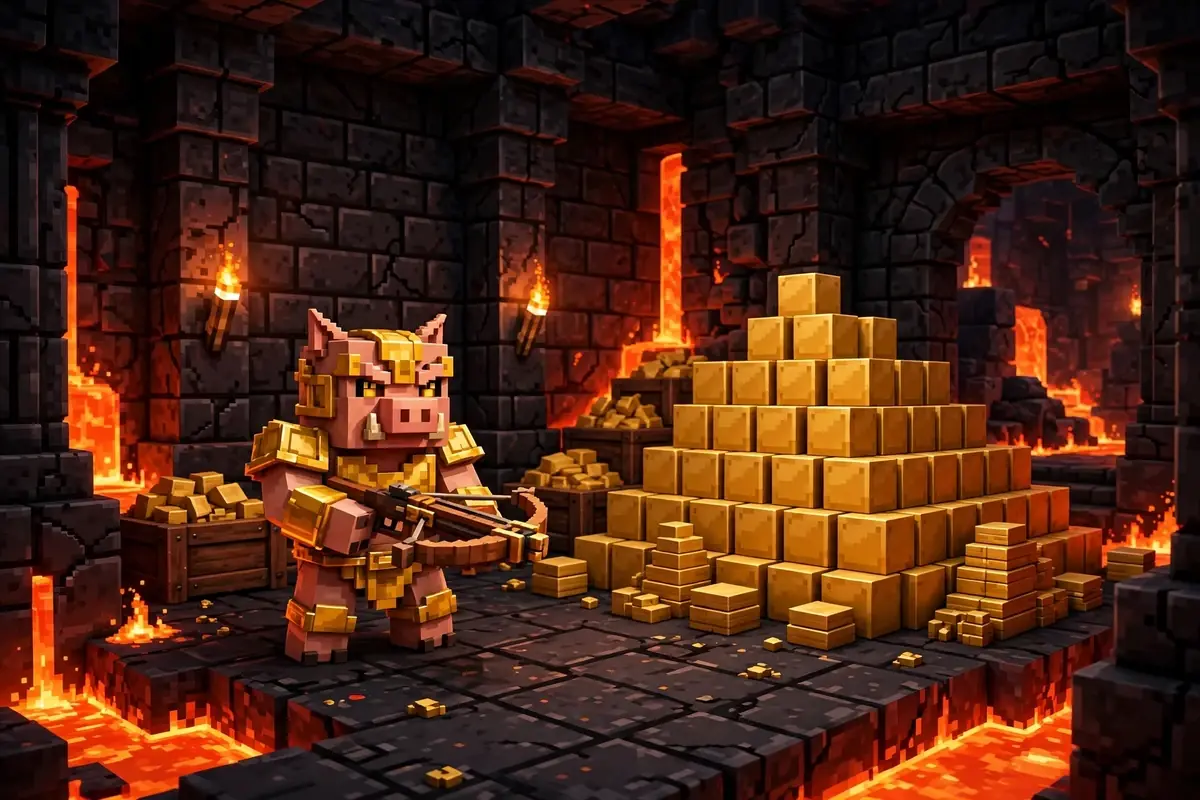
| Treasure Room | Central treasure chamber, magma cube spawner below | Gold blocks, the most gold of any type, high-tier loot |
| Housing Units | Residential blocks, piglin homes | Steady gold, piglin bartering partners, nether wart |
| Hoglin Stables | Open pens, hoglins inside | Hoglins for a food farm, plus gold and loot chests |
| Bridge | Long bridge structure, fewer rooms | Less loot, but the easiest to raid quickly |
In the minecraft bastion finder, Treasure Room bastions are the prize. Their central chamber holds gold blocks stacked in the walls – mine them carefully, because mining gold near piglins angers them even through gold armour. The magma cube spawner underneath is a farm opportunity: magma cream for fire resistance potions. Housing Units bastions are the safest all-rounders, with the most piglins to barter with. Hoglin Stables suit players building a hoglin farm, since the pens already contain the animals. Bridge bastions are the quick hit: less loot, but you can be in and out before the piglins organise.
If you are learning how to find bastion using chunkbase-style mapping, the key insight is the type label. A map that only shows bastion dots leaves you guessing; a map that names the type lets you choose Treasure Room runs and skip Bridge bastions entirely.
Two Facts That Change the Raid
Two facts are worth knowing before you raid. First, the Netherite Upgrade smithing template is guaranteed only in Treasure Room bastions, where the treasure chest always holds one; in the other three types it appears only as a chance drop in generic chests. If the template is your goal, skip straight to a Treasure Room. Second, piglin brutes never respawn – once you clear a bastion’s brutes, they stay cleared, though ordinary piglins can still wander in. And remember the spacing rule: each region of the Nether holds either one bastion or one fortress, never both side by side, so a bastion and a fortress are never neighbours. A minecraft bastion finder plots every bastion in the Nether, so you can pick the closest one and check its type on arrival instead of wandering.
Piglin Bartering and Gold Loot
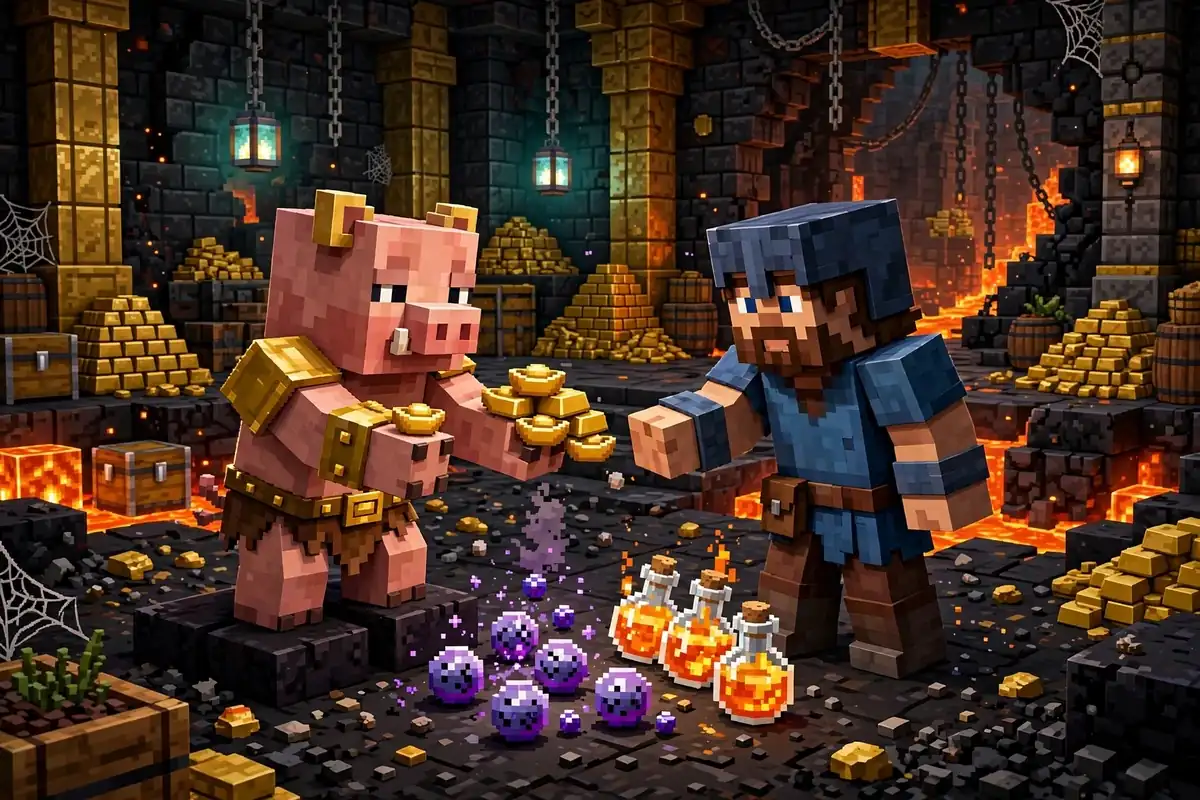
Bastions are the Nether’s gold mine, and the minecraft bastion finder shows you where every one of them sits. Piglins barter for gold ingots, and their trade table is stacked: Ender Pearls, fire resistance potions, obsidian, crying obsidian, soul speed books, spectral arrows, and more. A single bastion run with a stack of gold ingots can return the Ender Pearls for the whole End trip, without a single Enderman kill.
The rules are simple and absolute. Wear gold armour – one piece is enough – or neutral piglins attack on sight. Never mine gold blocks, open chests, or break gold ore near piglins; they treat it as theft and turn hostile even if you are wearing gold. Barter in a safe spot: drop gold ingots, let the piglin inspect them, collect the return item, and repeat. Piglin brutes, the ones with axes and no interest in negotiation, attack regardless of your armour – learn to spot them and give them a wide berth.
Loot chests in bastions hold the rest: ancient debris-adjacent treasures like netherite templates, enchanted books, saddles, and the Snout banner pattern, which only generates in bastions. The minecraft seed map nether bastion view lets you check a bastion’s type before you go, so bring bartering gold for Housing Units runs and mining tools for Treasure Room runs.
Bastion Finder for Bedrock
Bedrock players get the real Bedrock generator in the minecraft bastion finder, not a Java map relabelled. Bastion placement on Bedrock differs from Java, so select Bedrock in the version dropdown and paste your Bedrock seed before reading coordinates. The tool covers all 30 Bedrock versions from Beta 1.7 to 26.60.
One Bedrock note: the chunkbase bastion workflow ports straight over, and the bastion type labels work the same on Bedrock. If you are comparing bastion types across editions, remember that the four types generate the same way on both – the positions are what differ.
Bastion or Fortress First?
Both live in the Nether, both pay off, and the order depends on what you need. Bastion first if you want gold, bartering and Ender Pearls: a good bartering session can stock the whole End trip. Fortress first if you want brewing and the End: blaze rods and Eyes of Ender gate everything after. Most players do bastion first – gold armour plus bartered pearls makes the fortress run safer and shorter. The minecraft bastion finder pairs with the Minecraft Nether Fortress Finder for the other half, and the Minecraft Structure Finder shows every layer together when you want one portal serving both.
Stop stepping through portals blind. Paste your seed into the minecraft bastion finder above, pick a Treasure Room bastion, and go get rich – wearing gold.
Minecraft Bastion Finder vs Chunkbase Bastion Finder
Players who search for a chunkbase bastion finder already know the core workflow: paste a seed, read coordinates. The chunkbase bastion finder maps seeds you already have, and it does that job well. Where this tool differs is seed search: unlike a chunkbase bastion finder, this one can hunt for brand-new seeds with a bastion near spawn. That search step is what a chunkbase bastion finder leaves out – plus this tool runs the real Bedrock engine rather than a Java approximation, and names each bastion’s type in its details card. For the full side-by-side breakdown, see our Chunkbase alternative page, or plan a combined Nether run with the Nether Fortress Finder.
Final Thoughts
Bastions reward the player who reads the type label before entering. Treasure Room for gold and the Netherite Upgrade template, Housing Units for bartering, Stables for a hoglin farm – and gold armour on, always, before you step inside.
If you arrived here searching for a chunkbase bastion finder, you already know the workflow; the difference here is that you can also search for a fresh seed instead of settling for the world you have.
Stop stepping through portals blind. Paste your seed into the minecraft bastion finder on the seed map, pick a Treasure Room bastion, and go get rich – wearing gold. Then browse the finder hub or the best seeds to plan the rest of your world.